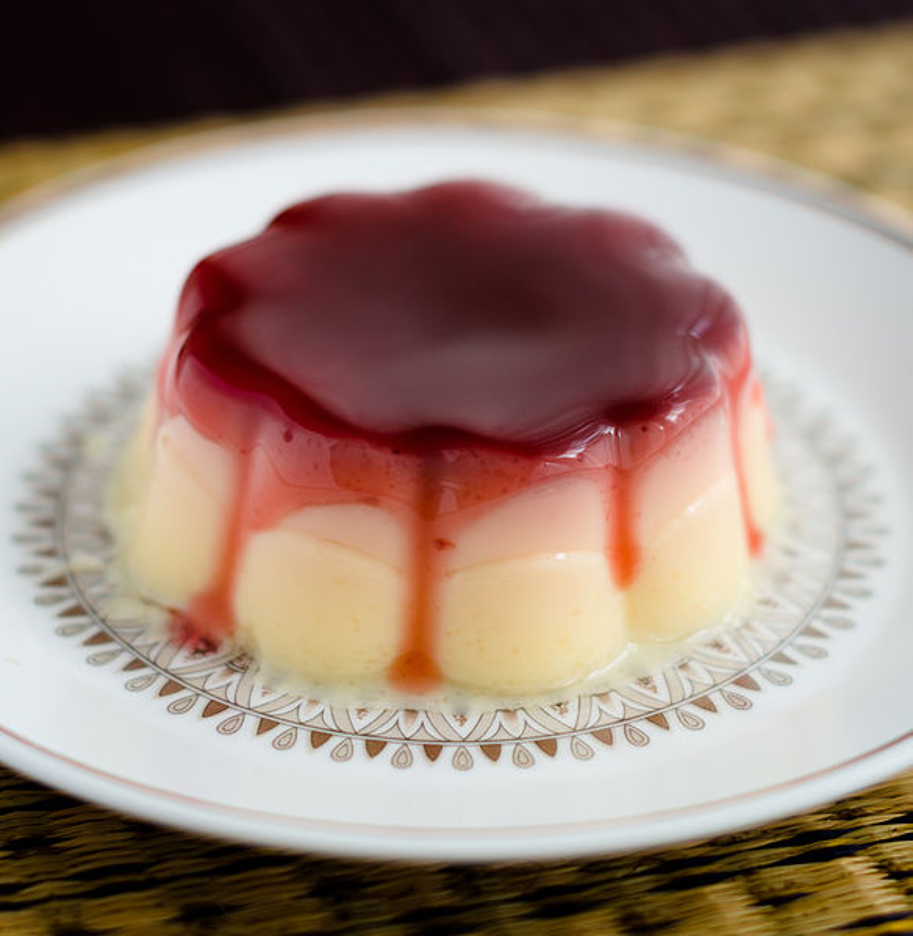
Pudding is a kind of desert made from sugar, milk, and some kind of thickener.
There are about a million different ways to make pudding that vary across countries and cultures. For this post, I’m just going to explain the well-known varieties of Western pudding. Some of them are pretty wild!
Cornstarch-based pudding
In these kinds of puddings, cornstarch acts as a thickener. Typically, you mix together milk, sugar, cornstarch, and whatever flavoring you want to start. You then heat it over a stove until it becomes thick. It’s one of the most common types out there!
Custard-based pudding
Custard is a kind of sweet milk thickened with eggs. I would argue that custard is just a specific and finicky type of pudding, rather than its own thing, but apparently this is a controversial take.
Custard isn’t really eaten by itself, which is probably because of how rich it is. Often, it’s used to fill donuts or cakes, such as Boston cream pie.
The most well-known custard deserts are flan (crème caramel in some countries) and crème brûlée. Both of these are custards that are cooked in a water bath and partially steamed.
Although their custards are the same, the main difference between them is in how they are assembled. In crème caramel, a cooked sugar syrup is poured into the bottom of the dish before it bakes. In crème brûlée, sugar is poured on top and torched until a hard shell forms.
Grain-based pudding
This is the kind of pudding you can find variations of just about anywhere in the world. They’re made from cooking grains in sweet milk until they’ve broken down. Rice pudding falls under this category, as does tapioca pudding.
Bread pudding
The only time I’ve ever made bread pudding was at college. My friends and I got together in a crusty dorm kitchen and assembled it from what few ingredients we had on hand. We stole eggs from an expired carton, bemoaned our lack of vanilla, and cut up bread with a crust so thick that it was chewy when it came out of the oven.
Honestly, though? Still good. Bread pudding is an A+ dessert.
The pudding I made is the kind we usually associate with this dish. You soak bread cubes in uncooked custard and then you bake it for a while. It’s good, sweet way to use up stale bread.
An English variation of bread pudding is the bread and butter pudding. It’s basically the same, but instead of cubes, you layer slices of buttered bread. The custard the bread soaks in also tends to be less sweet.
There’s also capirotada, a kind of Mexican bread pudding. Instead of a custard, this pudding is held together with cheese (often cheddar or Monterey jack) and a spiced piloncillo syrup. It’s also layered with nuts and dried fruit.
Avocado pudding
Avocado puddings are a modern invention. They’re basically just avocado, sugar, and additional liquid (usually milk or water) whipped up in a blender. Most avocado puddings have chocolate in them, which is probably because it’s the only flavor that can mask the avocado.
I’ve had this before, and honestly? It’s not bad – although, I’ve always liked weird health food. At least it’s full of healthy fats?
Chia seed pudding
Chia seed puddings are… puddings made of chia seeds. Yes, those kinds of chia seeds.
This is a kind of pudding you’ll often see on health food blogs. Chia seeds are full of vitamins and fiber, so it’s natural that healthy eaters would gravitate towards them.
When chia seeds absorb liquid, they plump up, becoming a tightly packed and gelatinous mixture. Chia pudding is usually an overnight kind of thing – you throw in all your ingredients, stir them around, and let things thicken on their own.
You can make chia pudding with whole seeds, or you can grind them into a powder first. I’ve always preferred the first option, since I think it’s more fun to eat something that’s seedy.
 Behind the Baking